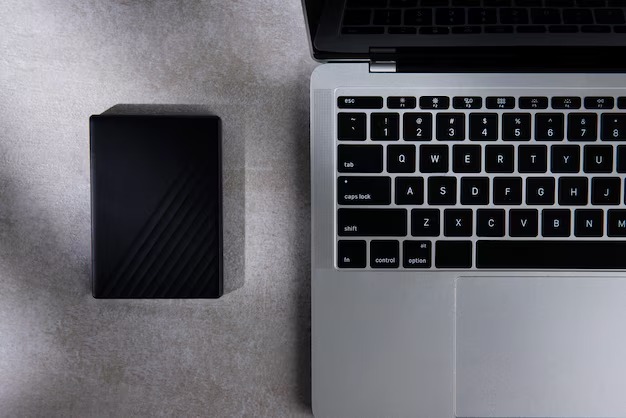
If you are seeking a solution that combines performance with minimal footprint, consider opting for a system equipped with advanced multi-core processors and integrated graphics capabilities. This configuration is suitable for handling daily tasks, from document editing to light graphic design, offering a seamless experience without occupying much desk space.
Look for configurations featuring at least 16GB of RAM and fast storage options like SSDs to enhance responsiveness. Such specifications will ensure smooth multitasking and quicker load times, making it a solid choice for both productivity and casual entertainment.
Connectability plays a significant role as well. A reliable device should offer multiple USB ports, HDMI output, and wireless connectivity options to cater to various peripherals. This versatility is essential for maintaining an organized and efficient workspace while enabling easy transitions to multimedia tasks in a living environment.
Finally, take energy efficiency into account. Models designed for lower power consumption not only save on electricity bills but also generate less heat, contributing to a more sustainable workspace. Selecting a device with a solid reputation for reliability and performance can enhance your computing experience across different activities.
Choosing the Right AMD Mini PC Model for Your Needs
Determine the specific tasks you need the system to handle before selecting a model. Whether your focus is on productivity in office tasks, casual gaming, or media consumption, there are tailored configurations available to suit each requirement. For instance, a model with enhanced graphics capabilities is ideal for gamers or graphic designers, while a basic unit suffices for word processing and browsing.
Performance Specifications
Evaluate the performance specifications critically. Processors from the Ryzen series are known for their balance between efficiency and power. Opt for models with at least 4 cores and a clock speed of 3.0 GHz to ensure smooth multitasking. Memory is another key aspect; 8GB of RAM is a baseline for typical usage, while 16GB or more is recommended for intensive applications and multitasking scenarios.
Storage options can greatly affect your experience. Decide between Solid State Drives (SSD) and Hard Disk Drives (HDD). SSDs provide significantly faster boot times and application loading, making them preferable for general use. A setup with an SSD combined with an additional HDD can offer both speed and ample storage for larger files.
Connectivity Features
Assess the connectivity features you may require. Ensure the unit includes multiple USB ports, HDMI outputs, and possibly a DisplayPort for versatile connections to peripherals. If you manage a home office, having built-in Wi-Fi and Bluetooth functionalities can enhance performance and connectivity with mobile devices and printers.
Energy efficiency is another factor to keep in mind. Look for models with low power consumption ratings to save costs in the long run. Systems utilizing advanced cooling technologies not only maintain performance but also operate quietly, creating a better working or entertainment environment.
Finally, consider the form factor and design of the unit. Ensure it fits well within your setup space, keeping aesthetics in mind as well. A sleek design can blend seamlessly into home décor or office environments while maintaining portability if you need to move it frequently.
Setting Up Your Compact AMD Mini PC: Step-by-Step Guide
Begin the configuration by connecting the power supply to the unit. Ensure the power source is stable and follows the specifications indicated in the manual. Plug the other end into a wall socket and switch on the power. Look for an LED indicator to confirm the unit is receiving power.
Connecting Peripherals
Next, attach the keyboard and mouse via USB ports. If you’re using wireless devices, insert the receiver into one of the USB slots. Connect a monitor using HDMI or DisplayPort, depending on the compatible output from your system. Adjust the monitor settings as needed for optimal display.
Proceed to power on the system. Upon booting, you may be prompted to set up the operating system. Follow on-screen instructions for language preferences, time zone, and network connection. A wired Ethernet connection often provides a more stable experience, but Wi-Fi is available if needed.
Finalizing Settings
Once the operating system is set, install any necessary updates. This includes drivers for optimal performance. Visit the appropriate support page for any additional software that may enhance functionality. Setting up user accounts can also be done at this stage to manage access and security effectively.
Optimizing Performance for Everyday Tasks on an AMD Mini PC
Adjust power settings to prioritize performance over energy savings. Navigate to the control panel and select high-performance mode to ensure maximum CPU and GPU capabilities during regular tasks. This adjustment can notably enhance responsiveness and smooth operation.
Regularly update system drivers and software. Keeping your operating system and applications current minimizes bugs and enhances compatibility with new features, leading to improved overall functionality. Set up automatic updates where feasible.
Utilize lightweight software alternatives whenever possible. Applications that consume less system resources can significantly affect productivity. For instance, consider using simplified text editors instead of heavier word processors for basic documentation work.
Increase RAM if the device supports it. Adding more memory can boost multitasking capabilities, allowing for smoother performance when running multiple applications simultaneously. This upgrade is particularly beneficial when working with memory-intensive programs.
Maintain adequate storage space by routinely cleaning up unnecessary files. Use built-in tools or third-party applications to remove temporary files and manage disk space effectively. A clutter-free drive can lead to faster data access and processing times.
Adjust visual effects settings to enhance performance. Disabling or reducing graphical enhancements can help in optimizing processing speed, especially in a work environment where graphical fidelity is not critical.
Regularly monitor system performance with built-in tools to identify any bottlenecks affecting speed. Task management utilities can reveal resource-hungry processes, allowing users to make informed decisions about which applications to limit or close.
Upgrading and Maintaining Your Mini PC for Long-Term Use
Consider increasing RAM to enhance multitasking capabilities. Most models support upgrades to 32GB or 64GB, which significantly boosts performance with demanding applications. Use compatible memory modules that match your device specifications for optimal results.
Storage Solutions
- Replace HDD with SSD for faster boot times and application loading.
- Utilize external drives or cloud storage for large file management.
- Check if NVMe or SATA connections are available for slot-in upgrades.
Regularly clean internal components to prevent dust accumulation. Dust buildup can lead to overheating, affecting performance. Use compressed air to carefully remove particles from fans and vents, ensuring optimal airflow.
System Updates
Install system and driver updates periodically. Keeping software up-to-date ensures security and compatibility with new hardware components. Set reminders every few months to check for updates, which also enhances system stability.
Q&A: Amd mini pc
What is the best AMD mini PC to buy in 2026?
The best amd mini pc depends on your budget, intended workload, and performance expectations. For everyday productivity, an amd ryzen 5 mini computer with 16gb ram and an NVMe SSD provides a practical balance of speed and affordability. More demanding users can consider AMD Ryzen 7 or Ryzen 9 systems with faster integrated graphics. Premium AMD mini pcs featuring Ryzen AI Max processors offer substantially greater graphics and AI processing capabilities. When comparing mini pcs with amd processors, evaluate CPU performance, memory capacity, storage expansion, cooling efficiency, and connectivity rather than focusing exclusively on the processor name.
Are AMD Ryzen mini PCs good for gaming in 2026?
An amd ryzen mini pc can provide enjoyable gaming performance, particularly when equipped with modern Radeon integrated graphics. Models featuring Ryzen AI 9 HX 370 or Ryzen AI Max processors offer stronger GPU capabilities than many older compact systems. For 1080p gaming, lightweight and moderately demanding titles can run smoothly with suitable graphics settings. However, modern AAA games may require reduced resolution or visual quality. A gaming mini pc with a dedicated GPU generally offers greater performance potential than a system relying on integrated graphics. The best gaming mini PC depends on your target games, frame rates, and budget.
What is the difference between AMD Ryzen 5, Ryzen 7, and Ryzen 9 mini PCs?
AMD Ryzen 5 mini pcs typically target affordable productivity, basic gaming, and everyday multitasking. An amd ryzen 7 configuration may provide additional CPU cores or stronger integrated graphics, depending on the specific processor. High-end amd ryzen 9 systems are better suited to demanding computing workloads, content creation, and advanced multitasking. However, performance differences depend on processor generation rather than branding alone. For example, an older Ryzen 9 is not automatically faster than a newer Ryzen 7. When selecting a ryzen mini pc, compare benchmark results, memory support, integrated graphics performance, and power limits.
Is the AMD Ryzen AI 9 HX 470 a good processor for a mini PC?
The amd ryzen ai 9 hx 470 is a high-performance processor from AMD’s Ryzen AI 400 Series. It features 12 CPU cores, 24 threads, Radeon 890M integrated graphics, and an AI acceleration engine. These specifications make it suitable for compact computers designed for productivity, multitasking, and local AI applications. Compared with older Ryzen mini PCs, systems using this processor can offer improved computing capabilities and modern platform features. However, actual performance depends on cooling, memory configuration, and manufacturer power settings. Before purchasing an ai mini pc, verify that the specific model uses this processor and supports your preferred operating system.
Can an AMD Ryzen AI Max mini PC replace a desktop gaming PC?
An amd ryzen ai max mini PC can replace a conventional desktop computer for many productivity, creative, and gaming tasks. Ryzen AI Max processors combine powerful CPU cores with high-performance AMD Radeon graphics and support substantial unified memory configurations. Selected systems can accommodate up to 128gb of memory, making them attractive for rendering and gaming as well as certain local AI workloads. However, their integrated graphics do not automatically outperform every dedicated desktop GPU. A traditional gaming pc may still offer better upgradeability and higher graphics performance. The main advantage of Ryzen AI Max is combining substantial computing capability with a compact form factor.
Is the ACEMAGIC K1 Mini PC with Ryzen 5 7430U worth buying?
The acemagic k1 mini pc equipped with an amd ryzen 5 7430u is a practical option for office productivity, web browsing, media consumption, and light gaming. This six-core processor includes integrated AMD Radeon graphics and supports common multitasking workloads. Configurations such as 16gb ram 512gb ssd provide enough resources for everyday computing and basic applications. However, the Ryzen 5 7430U is not intended for demanding modern games at high settings. The ACEMAGIC Mini system is most appealing when affordability, compact dimensions, and low power consumption matter more than maximum gaming performance.
Is a Ryzen 7 7730U or Ryzen 7 H255 mini PC better for everyday use?
Both the ryzen 7 7730u and ryzen 7 h255 can serve as processors for compact desktop systems, but they target different performance levels. The Ryzen 7 7730U features eight Zen 3 CPU cores and is commonly found in affordable mini computers designed for productivity. The Ryzen 7 H255 uses a newer architecture and can offer stronger processor performance under suitable power and cooling conditions. A geekom mini pc or another compact system with the older Ryzen processor may still be sufficient for office applications and media playback. Compare actual system benchmarks, memory configuration, and pricing before choosing between them.
Can AMD mini PCs support 4K displays, NVMe SSDs, and DDR5 RAM?
Many modern amd mini pcs support 4k displays, fast NVMe storage, and DDR5 RAM, although capabilities vary by processor and motherboard design. Some Ryzen 5 and Ryzen 7 systems use DDR4 RAM, while newer Ryzen AI configurations commonly support DDR5 or LPDDR5X memory. Storage options may include PCIe 4.0 NVMe drives, with selected models supporting a 2tb pcie 4.0 ssd or larger capacities. Multiple monitor support depends on the available HDMI, DisplayPort, and USB-C connections. Before purchasing a mini desktop pc, check its maximum display resolution, supported memory capacity, available SSD slots, and external connectivity.
Are AMD Ryzen AI mini PCs suitable for local AI and automation?
An amd ryzen™ ai mini pc can support local AI assistance, image processing, and selected machine learning applications when compatible software is available. Processors such as the Ryzen AI 9 HX 370 and Ryzen AI 9 HX 470 include dedicated neural processing capabilities. Higher-end Ryzen AI Max systems may be especially attractive for running certain local AI models because of their processing resources and unified memory configurations. However, agentic ai applications and cloud-based ai agents for research may still depend on internet services, external APIs, or specialized software. The effectiveness of local AI workloads depends on model size, available memory, acceleration support, and application compatibility.
How do AMD mini PCs compare with Intel mini PCs for work and gaming?
AMD and Intel mini pcs offer different advantages depending on the processor, graphics architecture, and system configuration. Many amd ryzen mini systems feature capable Radeon integrated graphics, making them attractive for lightweight PC gaming and everyday productivity. An intel mini computer may offer competitive CPU performance, media processing capabilities, and connectivity, depending on its generation. For an ai pc, compare neural processing capabilities and software compatibility rather than relying only on marketing labels. The best mini pc 2026 configuration should combine sufficient RAM, fast SSD storage, reliable cooling, and suitable connectivity. Choosing the right system depends on whether your priority is multitasking and gaming, office productivity, or local AI workloads.