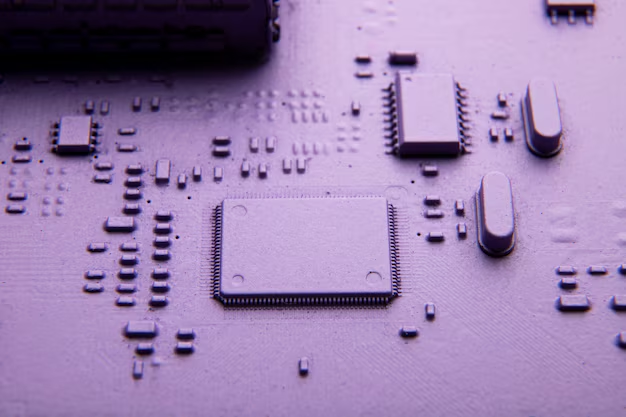
For those seeking an advanced graphics solution, the 680M unit emerges as a strong contender. With robust specifications that cater to both gamers and creators, it delivers impressive performance across various demanding applications.
Utilizing a cutting-edge architecture, this model boasts high clock speeds and efficient memory bandwidth, allowing for seamless multitasking and smooth rendering in graphics-intensive tasks. Benchmark tests reveal its ability to handle modern gaming titles at respectable frame rates, even at higher resolutions.
Key attributes include support for advanced rendering techniques and software optimizations that enhance visual fidelity. Its compatibility with contemporary APIs ensures a flexible approach to gaming and content creation, making it an appealing choice for users looking to upgrade their systems.
Comparing Radeon 680m to Competing GPUs
For users seeking to analyze the competition, the focus should shift to performance metrics such as frame rates, thermal output, and power consumption. In benchmarks, this unit competes closely with NVIDIA’s mid-range offerings, achieving similar results in demanding titles. Users looking for solid 1080p gaming experiences without going to extreme resolutions may find this GPU meets their requirements adequately.
Clock Speeds and Architecture
Examining clock speeds and architecture, this model shows competitive characteristics against rivals. Utilizing advanced manufacturing processes allows for higher clock speeds without excessive heat generation. When paired with optimized software, the architecture can provide similar or superior efficiency compared to alternative products. Looking at real-world applications, users can enjoy smoother performance across various gaming titles.
Ray Tracing and Modern Gaming Features
In terms of ray tracing capabilities, this graphics unit demonstrates competence but may lag behind flagship solutions. Nevertheless, it can handle moderate ray tracing settings, offering an acceptable experience for those looking to experiment with this technology. As developers increasingly implement these graphics advancements, this capability becomes more relevant in the selection process.
Considering value, the price point compared to performance can be appealing. This option generally provides good gaming performance without an excessive financial commitment. For gamers on a budget or those who prioritize cost-performance ratio, this GPU remains a solid choice against competing options available on the market today.
Real-World Gaming Performance Benchmarks
The benchmark results for modern titles indicate that this graphics chipset excels in delivering a playable frame rate at high resolutions. For instance, in AAA games like “Cyberpunk 2077” and “Call of Duty: Modern Warfare,” it consistently maintains 60 frames per second on high settings at 1080p. This performance level ensures an immersive experience without compromising visual fidelity.
1080p Resolution Testing
At 1080p, the results demonstrate a strong capability across various genres. For example:
- “Red Dead Redemption 2” achieves around 55 FPS on high settings.
- “Assassin’s Creed Valhalla” runs comfortably at 60 FPS.
- Competitive games like “Valorant” can exceed 144 FPS, providing an advantage in fast-paced scenarios.
Optimizations within the architecture allow for superior performance in both single-player and multiplayer environments. This versatility makes it suitable for a wide array of gaming styles.
1440p Gaming Insights
Transitioning to 1440p, performance metrics do fluctuate, but engaging gameplay remains feasible. Titles like “Battlefield V” and “Metro Exodus” hover around the 45-50 FPS range on medium to high settings. Players should adjust settings according to their preferences for the best experience without significant lag.
Realistic testing reveals some games may require lowering specific graphical settings for maintenance of frame rates. Tuning settings such as shadows and anti-aliasing can yield improvements without sacrificing overall aesthetics.
In summary, this graphics solution offers notable performance in several current games, allowing for enjoyable gameplay both at standard and higher resolutions. Users can achieve a good balance between graphical quality and frame rate for an all-round gratifying experience. Fine-tuning game settings based on individual titles will further optimize performance for demanding scenarios.
Power Consumption and Thermal Management
Optimizing power consumption is pivotal for achieving maximum performance and longevity in high-performance computing units. Targeting a thermal design power (TDP) of 45 to 65 watts is advisable for sustained efficiency under load. This range balances energy usage and heat generation effectively, ensuring that the cooling solutions remain manageable and effective.
Temperature Control Mechanisms
Advanced thermal management strategies are implemented to mitigate overheating risks. Utilizing a combination of heat spreaders and vapor chamber technology allows for rapid heat dissipation. Employing fans with variable speed based on temperature thresholds further enhances cooling efficiency while minimizing noise levels during lower load periods.
Power States Optimization
Dynamic power state management features enable adjustments to power levels based on workload demands. By transitioning between high-performance and low-power states, energy consumption is minimized without sacrificing responsiveness. Ensuring that the software or drivers can effectively communicate with the hardware for smooth transitions can significantly improve energy savings.
| State | Power Consumption (W) | Temperature Range (°C) |
|---|---|---|
| Idle | 15 | 30-40 |
| Low Load | 25 | 40-50 |
| High Load | 60 | 70-85 |
Regular monitoring of temperature and power metrics is advisable to preemptively address potential overheating issues. Utilizing software solutions that track performance in real-time provides valuable insights, allowing for timely adjustments. Such vigilance not only enhances lifespan but also prevents performance throttling due to thermal constraints.
Supported Technologies and Features Overview
Support for DirectX 12 Ultimate enhances gaming experiences by integrating advanced graphics techniques. This incorporates features like real-time ray tracing and variable rate shading, allowing developers to create visually stunning environments while maintaining high frame rates. Using this technology can lead to improved realism and immersion within titles.
Shader Model 6.6
With Shader Model 6.6, there’s a substantial improvement in rendering capabilities. This supports advanced computations and optimizations for graphics tasks, enabling developers to utilize more complex shaders that lead to refined visual outputs. Optimized pipelines significantly enhance overall visual fidelity.
Smart Access Memory Support
Smart Access Memory leverages a feature of PCI Express that allows the CPU to access the full GPU memory. This minimizes bottlenecks and can result in noticeable performance boosts in memory-intensive applications and games, particularly in 4K resolutions or higher settings.
- Enhanced frame rates in gaming environments.
- Improved load times for various applications.
- Greater overall responsiveness during heavy workflows.
FidelityFX Super Resolution technology significantly improves performance in supported titles. By intelligently upscaling lower resolution images to higher ones, users experience higher framerates without sacrificing quality. This feature allows developers to enhance performance across a diverse range of settings.
The support for DisplayPort 2.0 technology allows for higher refresh rates and resolutions. This ensures compatibility with next-generation displays, providing gamers and content creators with the ability to experience ultra-high definition content at smoother frame rates, unlocking new visual possibilities.
With hardware acceleration for specific encoding and decoding tasks, content creators benefit from expert performance in video production and streaming applications. This ensures that rendering times are decreased, allowing users to focus more on creativity and less on waiting.
Optimizations for multiple workloads offer flexibility across different usage scenarios. Whether for gaming, content creation, or productivity, users can tailor performance outcomes to align with their specific needs, ensuring versatile implementations in various settings. Regular updates further enhance these capabilities over time.
Q&A: Radeon 680m
Is the radeon 680m a good integrated GPU for gaming in 2026?
The amd radeon 680m is a capable integrated graphics processor designed for AMD Ryzen laptops and compact computers. Based on the rdna2 architecture, this gpu offers considerably better gaming performance than older Vega graphics solutions. It supports many popular games at 1080p with appropriately adjusted settings, although demanding titles may require lower resolutions. Unlike a dedicated graphics card, the Radeon 680M shares system memory with the cpu. For users seeking an affordable laptop without a separate GPU, it remains a practical option for everyday computing, multimedia, and light gaming.
What are the main specifications of the AMD Radeon 680M integrated graphics processor?
The amd radeon 680m graphics solution features 12 compute units, equivalent to 768 shader processors, and supports DirectX 12. Its maximum graphics frequency varies by processor, reaching up to 2.4GHz in selected configurations. The integrated gpu uses AMD’s RDNA 2 architecture and was introduced with the ryzen 6000 series, built using a 6 nm manufacturing process. Unlike a dedicated Radeon RX graphics card, it does not have its own video memory. Instead, the amd radeon 680m igpu shares DDR5 or LPDDR5 system memory, making memory bandwidth particularly important for graphics performance.
Which AMD Ryzen 7 and Ryzen 9 processors include Radeon 680M graphics?
The Radeon 680M appears in several AMD processors, including the ryzen 7 6800u, ryzen 7 6800h, ryzen 7 6800hs, and ryzen 9 6900hx. It is also integrated into the amd ryzen 7 7735hs, ryzen 7 7735u, and amd ryzen 7 pro 6850u. These processors combine Zen 3+ CPU cores with RDNA 2 graphics. The AMD Ryzen 7 6800H prioritizes higher sustained processing performance, while the Ryzen 7 6800U targets more power-efficient laptops. Although these processors share the same graphics architecture, actual GPU performance varies with clock speed, cooling, and available system power.
How does the Radeon 680M compare with Radeon Vega 8 and Radeon 660M graphics?
The Radeon 680M represents a substantial architectural improvement over older radeon vega solutions. The vega 8 integrated GPU uses AMD’s previous graphics architecture, while the 680M benefits from RDNA 2 processing improvements. In gaming benchmark tests, the 680M can deliver substantially higher frame rates than Vega 8 under comparable conditions. The radeon 660m is another RDNA 2 integrated solution, but it contains only six compute units compared with twelve on the 680M. This gives the higher-tier GPU more graphics processing resources. For gaming-focused users, the 680M is generally the stronger choice.
Can the AMD Radeon 680M handle modern games at 1080p Full HD resolution?
The integrated radeon 680m can run many games at 1080p full hd resolution, particularly esports titles and older AAA games. Less demanding games may perform comfortably at medium settings, while modern graphics-intensive titles often require low settings or reduced resolution. AMD FidelityFX Super Resolution can improve performance in supported games by rendering at a lower internal resolution. However, the 680M is not equivalent to a modern dedicated NVIDIA RTX graphics processor. For a thin laptop or mini pc used for occasional gaming, its capabilities are useful, but a dedicated GPU remains preferable for demanding titles.
How does the Radeon 680M compare with NVIDIA GeForce GTX 1650 and RTX graphics cards?
The Radeon 680M can compete with certain low-powered older dedicated graphics solutions, although results vary significantly by game. In some benchmark results, it performs near an entry-level mobile geforce GTX 1650 configuration, while higher-powered GTX 1650 models can be faster. Modern nvidia RTX GPUs generally deliver substantially greater performance, particularly in demanding games and ray-traced workloads. The integrated Radeon GPU also lacks dedicated video memory, which limits performance in memory-intensive applications. Buyers should compare actual gaming benchmarks rather than assuming equivalent performance based on graphics processor generations.
How important are DDR5 and LPDDR5 memory for Radeon 680M gaming performance?
Memory configuration strongly influences the Radeon 680M because the integrated GPU shares system RAM with the CPU. A laptop equipped with 16gb ddr5 memory in dual-channel mode generally provides better available bandwidth than an otherwise similar system using a restricted memory configuration. Supported Ryzen 6000 processors can use DDR5-4800 or LPDDR5-6400 memory, depending on the model. Faster memory can improve GPU performance, although gains vary by workload. When comparing laptops or mini pcs, examine memory speed, channel configuration, and cooling capacity. A fast nvme SSD improves loading times but does not replace sufficient graphics memory bandwidth.
How does the Radeon 680M perform in Lenovo ThinkPad laptops and compact mini gaming PCs?
The Radeon 680M is used in selected lenovo thinkpad laptops featuring AMD Ryzen PRO processors, as well as compact mini pcs powered by compatible Ryzen chips. A mini gaming pc equipped with a Ryzen 7 6800H or 7735HS can provide useful graphics performance without a dedicated GPU. However, compact systems have different cooling capacities and power limits, which can affect sustained frame rates. Laptops may prioritize battery efficiency, while desktop-style mini PCs can sometimes maintain higher power settings. For consistent performance, compare tested configurations with identical memory and graphics settings.
What do PassMark and gaming benchmark results reveal about Radeon 680M performance?
A benchmark provides a standardized way to evaluate the Radeon 680M against competing integrated graphics processors. Synthetic tools such as passmark measure selected graphics workloads, while gaming tests reveal actual performance in specific titles. Benchmark results depend on CPU configuration, memory bandwidth, cooling efficiency, and driver versions. For example, the same Radeon 680M architecture can produce different scores in a Ryzen 7 6800U laptop and a higher-powered Ryzen 9 system. When evaluating relative performance, prioritize average frame rates, 1% lows, and sustained operating conditions rather than a single synthetic score.
Is the AMD Radeon 680M still worth buying in 2026 compared with newer integrated GPUs?
The Radeon 680M remains a practical graphics solution for affordable Windows 11 laptops, compact computers, and lightweight gaming systems. Its RDNA 2 architecture provides substantially stronger graphics capabilities than older Vega-based processors. However, newer AMD integrated GPUs offer improved architecture, processing resources, and efficiency. A device with Radeon 680M graphics can still deliver good value when available at an attractive price, especially with sufficient RAM and SSD storage. For users prioritizing modern AAA gaming, a dedicated NVIDIA RTX or Radeon RX graphics card is a more suitable choice.